
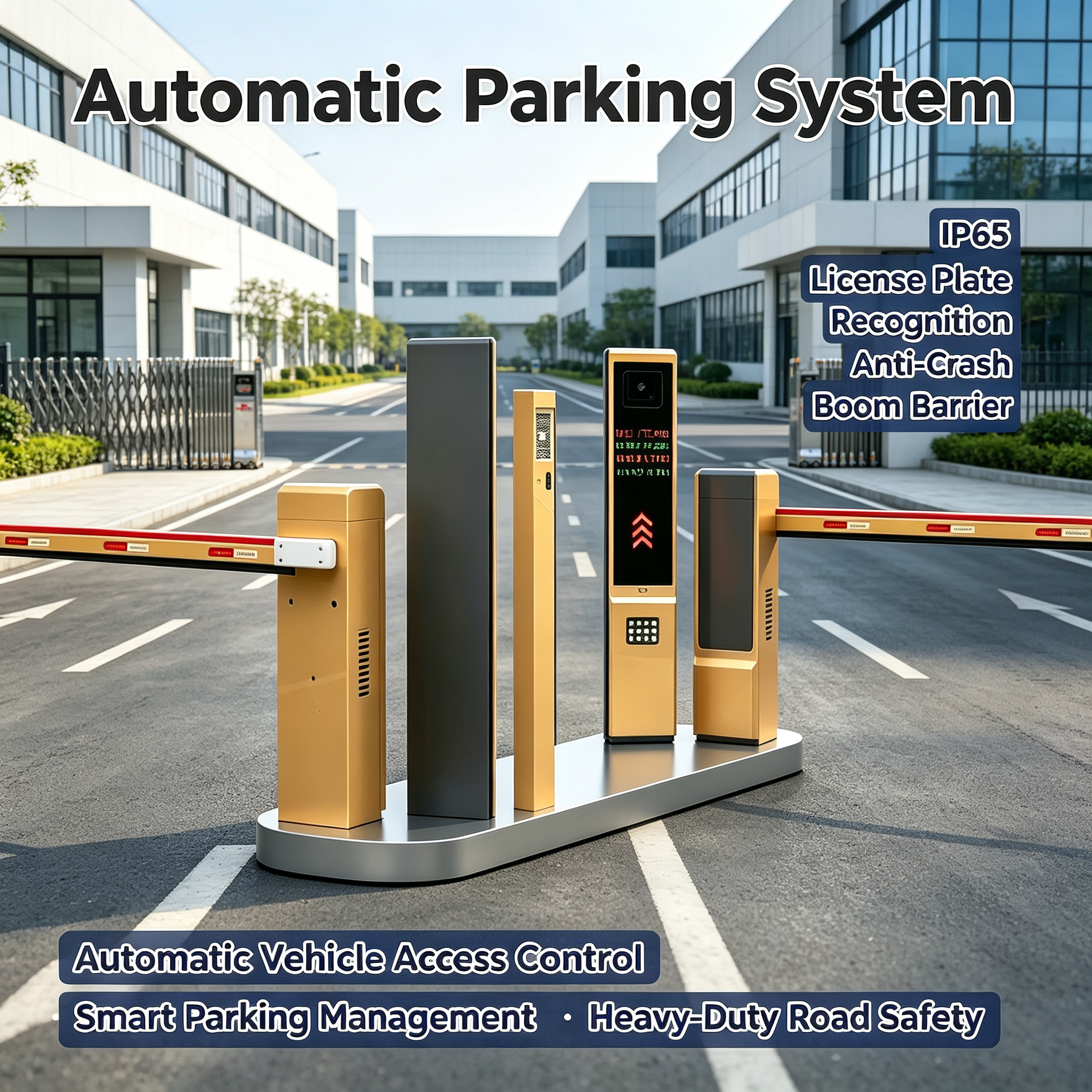
Quick answer: Parking barriers help industrial sites control which vehicles can enter, when they can enter and which areas they can reach. At factories, distribution centres, warehouses, logistics parks and utility facilities, an automatic boom barrier acts as a physical checkpoint at the site entrance. Connected to an access-control system, it can work with authorised vehicle lists, staff credentials, visitor approvals, delivery bookings or number plate recognition to make vehicle movements more structured and traceable.
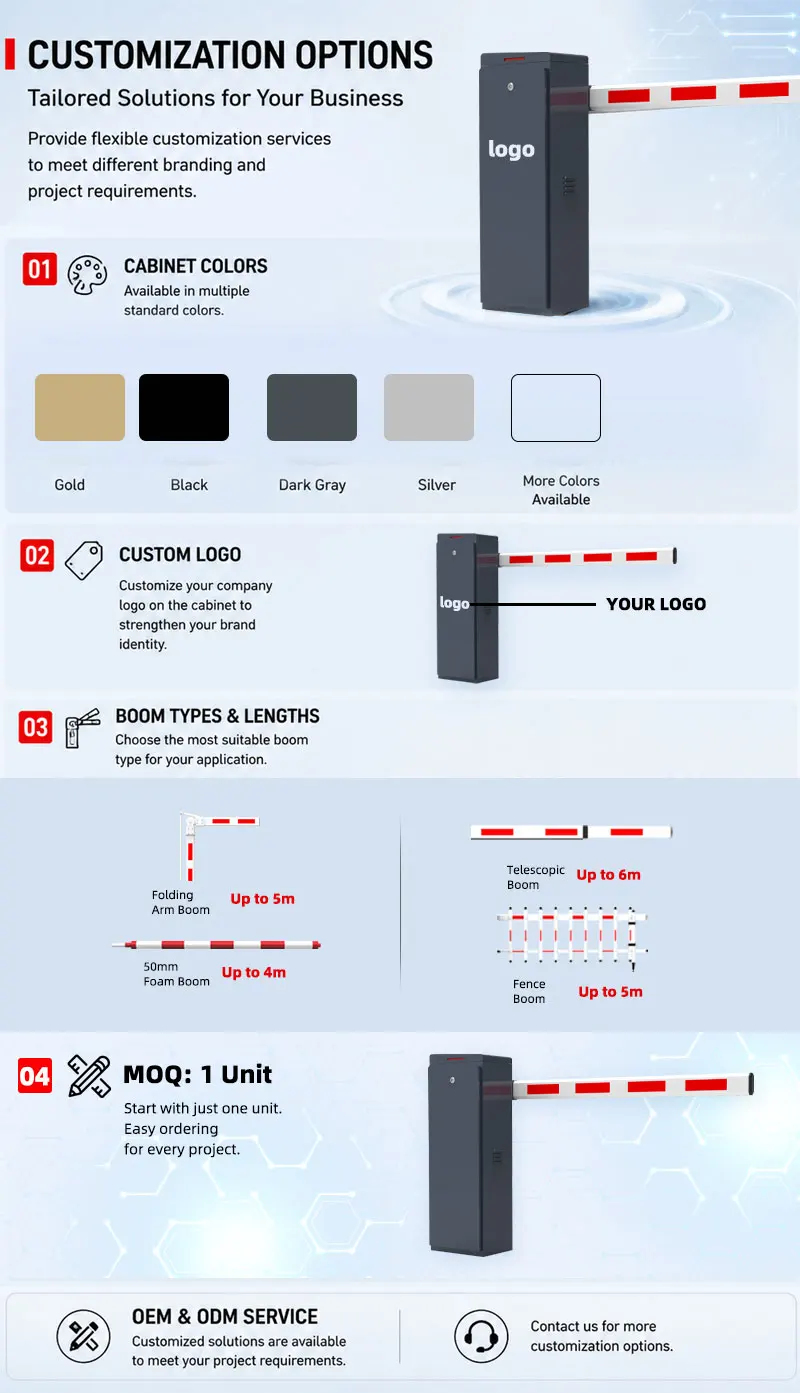
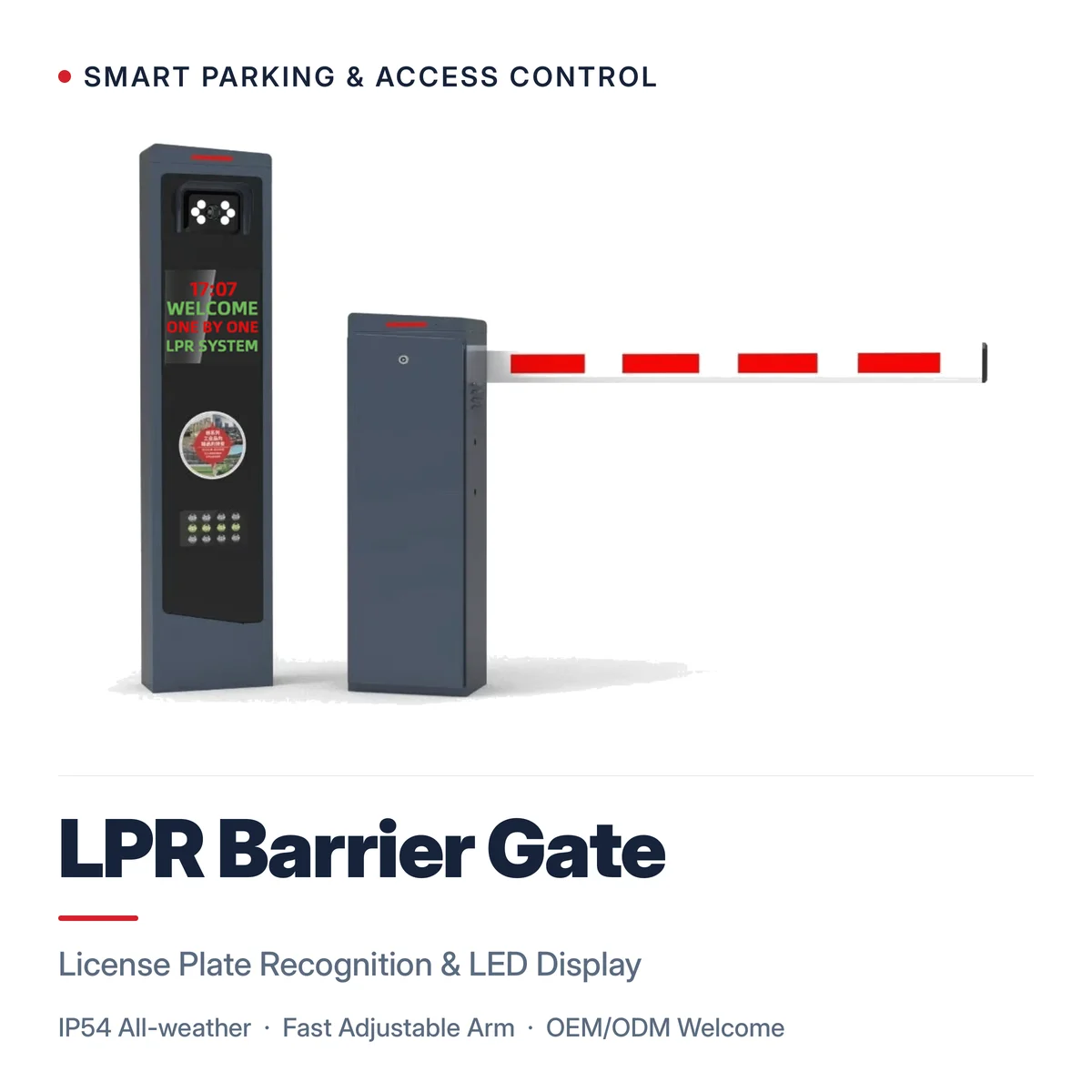
Our range includes boom barriers, high-speed barrier gates, ANPR and LPR number plate systems, automatic RFID barriers, vehicle-detection radar and pedestrian turnstiles. These product categories can be considered as building blocks for a site-specific access-control design. The right combination depends on traffic volume, vehicle types, security requirements, lane geometry and the interfaces supported by the selected models.
Why is vehicle access control important at industrial sites?
Industrial sites often combine employee cars, contractor vans, HGVs, delivery vehicles, maintenance teams and occasional visitors. Without a clear entry process, unauthorised vehicles may reach loading areas, production yards or restricted storage zones. Uncontrolled arrivals can also create congestion at security gates, complicate delivery scheduling and make it harder to investigate an incident.
A parking barrier is not a complete security system on its own. It provides a physical means of controlling a lane, while access credentials, visitor procedures, CCTV, intercoms, alarms and site rules determine who should be allowed through. The most effective solution treats the barrier as one part of a wider vehicle and pedestrian access-control plan.
1. Restricting entry to authorised vehicles
The simplest application is to prevent casual or unauthorised vehicles from driving directly into an industrial estate. The barrier remains closed until a recognised credential or approved command is received. Depending on the operating policy, authorisation may be based on an RFID tag, access card, keypad code, remote control, approved visitor entry or an ANPR match against an authorised vehicle list.
For a factory with regular staff parking, RFID credentials can offer convenient repeat access. For a site receiving frequent deliveries, ANPR may help identify registered fleet vehicles without requiring the driver to present a card at the entrance. Some sites combine both methods so that a second credential or manual approval is available when a plate cannot be read or a visitor is not pre-registered.
2. Separating staff, visitors and delivery traffic
A well-designed industrial entrance can route different users through separate lanes or operating procedures. Employees may use a permanent credential, contractors may need a time-limited permit, and delivery vehicles may be checked against a booking or purchase-order reference. The barrier controller or connected access platform can apply the relevant rules before opening the lane.
This is particularly useful where the site has a busy gatehouse or a limited turning area. Clear lane markings, advance signs, a safe waiting area and a documented exception process help prevent queues from backing onto public roads. The barrier should be positioned so that an HGV can stop for authorisation without blocking a junction, pedestrian route or emergency access.
3. Integrating ANPR number plate recognition
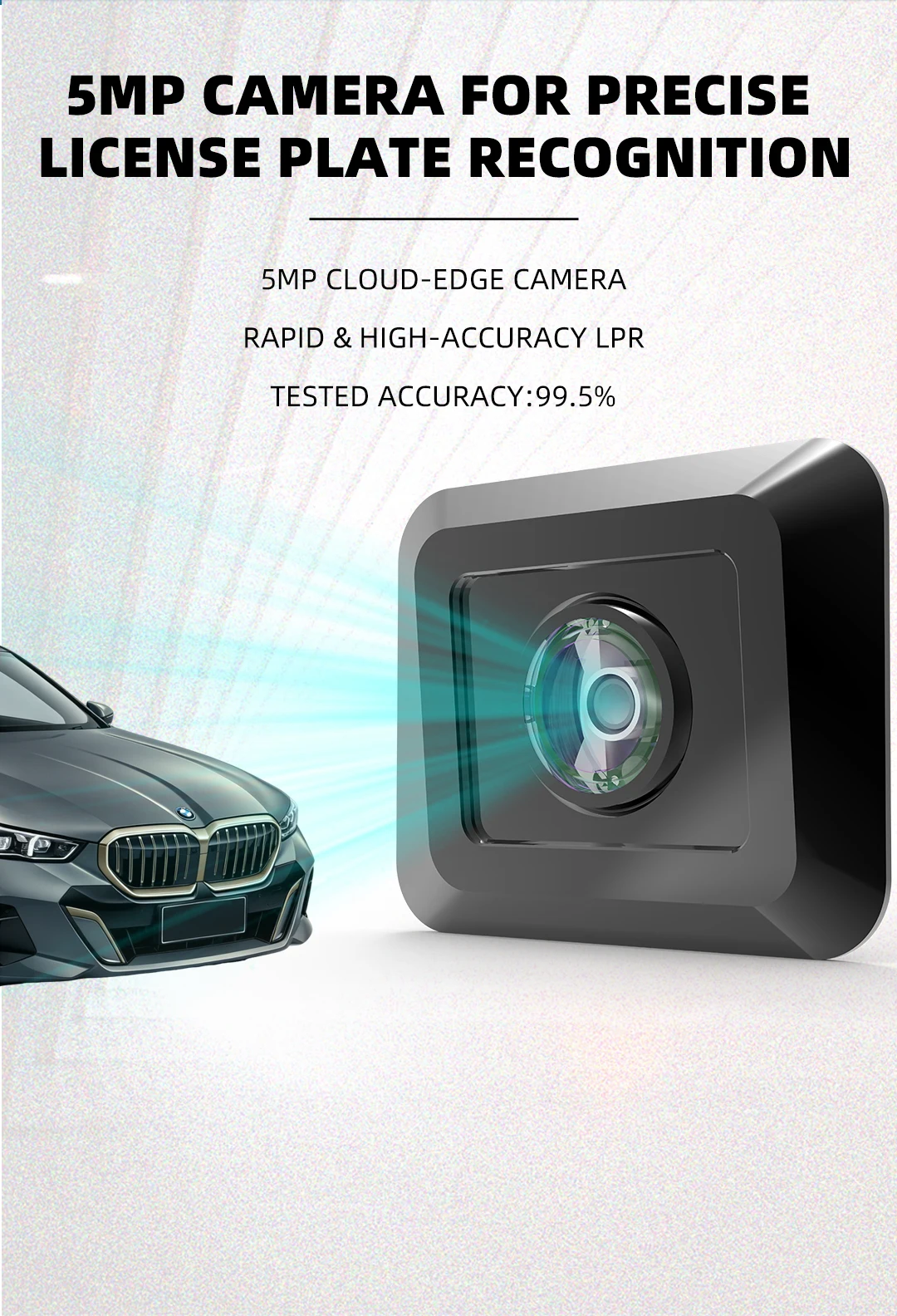
Automatic Number Plate Recognition (ANPR) uses a camera and recognition software to read a vehicle registration mark. The system checks the result against configured permissions and, if the vehicle is authorised and all operating conditions are met, sends a command to the barrier controller. ANPR can be useful for regular fleet vehicles, staff vehicles, approved contractors and pre-booked deliveries.
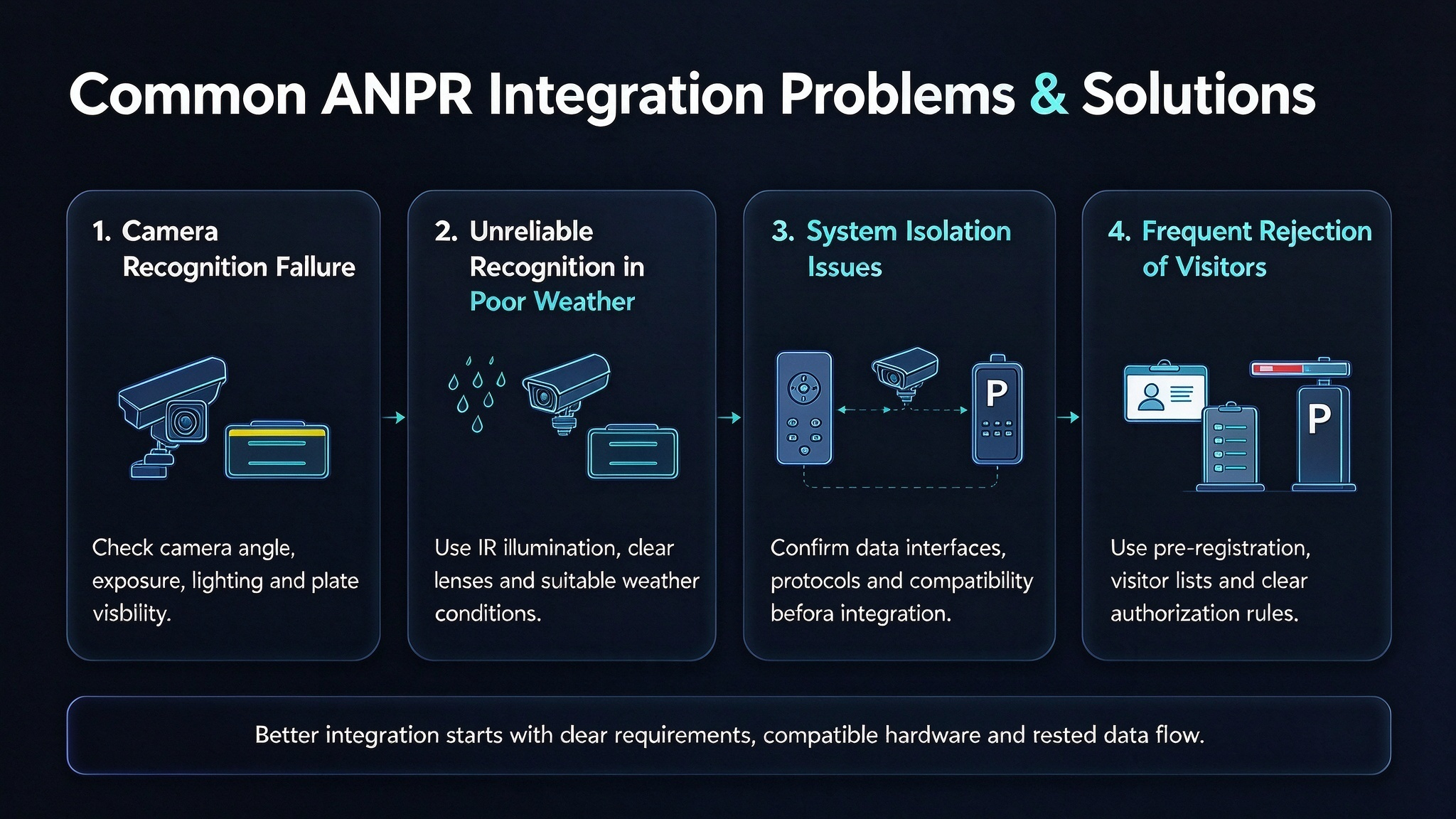
The camera position, lighting, lane width, vehicle speed and the condition of number plates affect recognition performance. Industrial sites should also consider dirt, rain, glare, headlights, unusual vehicle heights and trailers. Ask the supplier to demonstrate the proposed camera arrangement and explain how the system handles an unreadable plate, a mismatch or a network outage. A failed read should trigger a defined fallback procedure rather than an improvised decision at the gate.
4. Using RFID for repeat vehicle access
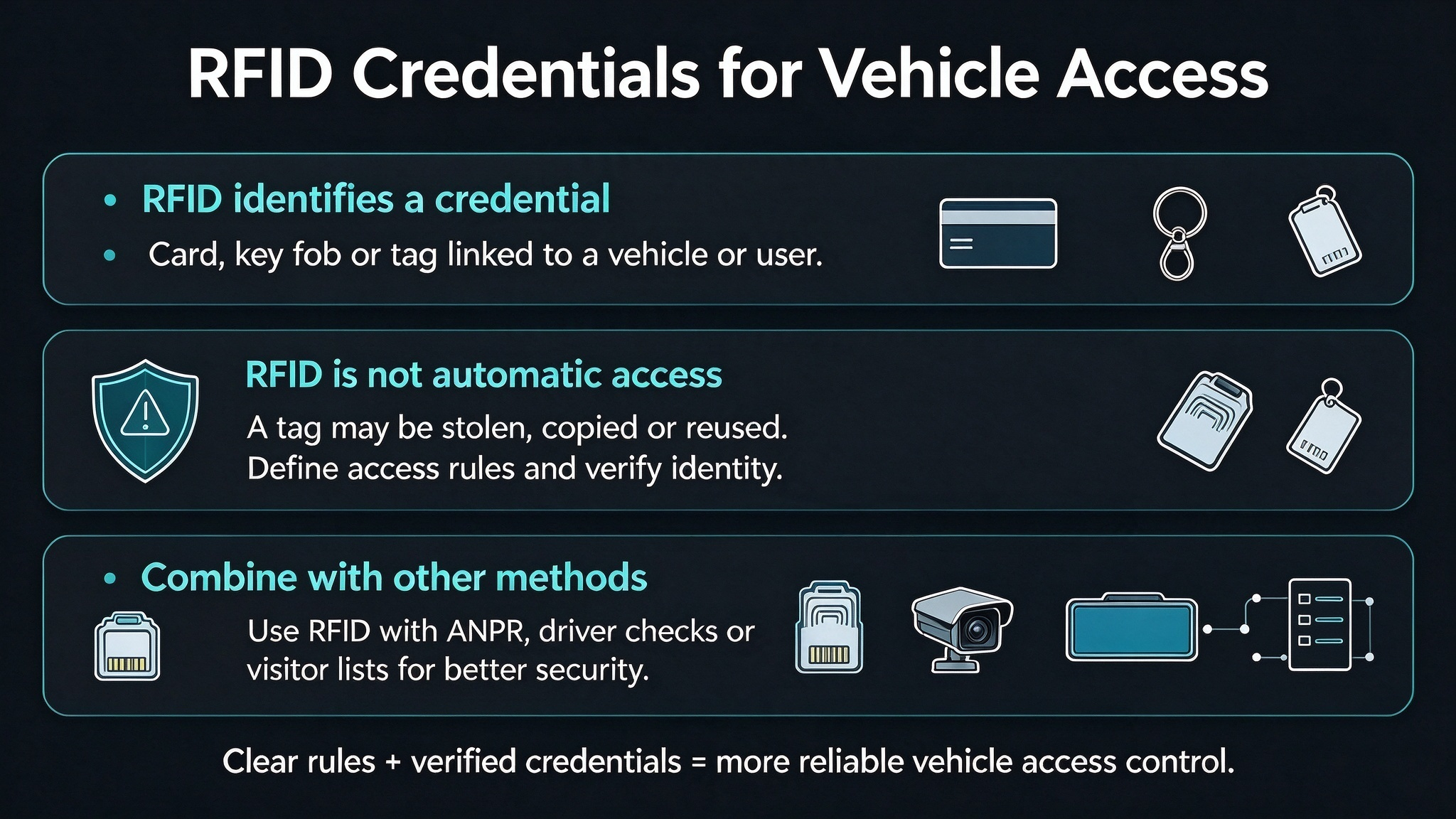
RFID readers identify a compatible tag or credential assigned to a vehicle or user. For regular staff, approved fleet operators or repeat contractors, this can make entry quick and consistent. Long-range RFID may be suitable where vehicles should be identified before reaching the barrier, but the effective reading distance and installation geometry must be confirmed for the selected equipment and site.
RFID should not automatically be treated as proof that the vehicle itself is permitted. A lost tag, a shared credential or a vehicle change can create a security gap. Define how tags are issued, suspended and recovered, and consider combining RFID with a vehicle list, driver check or ANPR where the risk assessment justifies it.
5. Managing high-volume HGV and logistics traffic
Distribution centres and manufacturing plants may experience sharp peaks at shift changes, collection windows or scheduled delivery periods. A barrier selected for the real traffic volume can help regulate arrivals and prevent unauthorised vehicles entering the yard. High-speed or high-cycle models may be appropriate for busy lanes, but selection should be based on the manufacturer's confirmed duty rating, boom length, wind exposure and required opening time.
For HGV entrances, check the swept path, stopping distance, queue capacity and the space needed for a vehicle to clear the barrier before it closes. A barrier that is too slow can create a bottleneck; one that is too fast or poorly coordinated with detection equipment can create safety risks. Use a site survey and trial operating sequence to balance throughput with safe movement.
6. Supporting perimeter security and restricted zones
A barrier at the main gate can form the first checkpoint, while additional barriers or powered gates can control access to fuel storage, loading bays, staff parking or other restricted areas. Different zones can use different permissions and operating hours. For higher-security locations, vehicle barriers should be designed alongside fencing, lighting, CCTV, guard procedures and an emergency response plan.
A standard parking boom barrier is primarily a traffic-control device; it should not be assumed to stop a determined hostile vehicle or replace a certified crash-rated barrier. Where impact resistance or hostile-vehicle mitigation is required, specify a system tested and rated for the relevant threat and obtain written confirmation from the supplier.
7. Improving vehicle and pedestrian safety
Industrial entrances can bring moving vehicles, pedestrians, cyclists and reversing HGVs into close proximity. A barrier should be installed as part of a safe traffic layout, with clear signs, suitable visibility, controlled approach speeds and a defined pedestrian route. Where needed, use vehicle-detection loops, radar, photoelectric devices or other compatible safety equipment to help detect vehicles and prevent the boom from closing at the wrong time.
Safety devices must be selected, installed and tested for the actual barrier model and risk assessment. They do not remove the need for safe lane geometry, maintenance, user training or a documented emergency-release procedure. Confirm applicable legal requirements and relevant standards with a competent installer or safety professional before commissioning.
8. Creating an auditable record of vehicle movements
When connected to a suitable access-control or parking-management platform, the system may log the time of a request, the credential or number plate presented, the access decision and the barrier event. Such records can help site teams investigate delivery disputes, review unusual access attempts and understand traffic patterns. The available event data depends on the system configuration and software.
Industrial operators should define who can view or export logs, how long records are retained and how data is protected. If number plates are recorded, consider applicable data-protection obligations, provide appropriate notices and document the purpose and retention period. Seek advice from the organisation's data-protection lead where needed; this article is not legal advice.
Which barrier and access-control combination should an industrial site choose?
| Site requirement | Possible configuration | Key checks |
|---|---|---|
| Regular employee vehicles | Boom barrier + RFID reader | Credential administration, reading distance, peak traffic |
| Approved fleet and visitor vehicles | Boom barrier + ANPR + access software | Plate-read conditions, whitelist updates, fallback process |
| Busy warehouse or distribution centre | Duty-rated boom barrier + vehicle detection + access controller | HGV geometry, cycle rating, queue length, safety devices |
| Restricted internal zone | Barrier or powered gate + role-based permissions | Zone policy, CCTV, fencing and emergency access |
| Mixed staff and delivery traffic | Separate lanes or operating rules + ANPR/RFID/manual approval | Signage, lane allocation, exception handling |
The table is a starting point, not a final specification. Before purchasing, confirm the barrier arm length, duty cycle, motor type, power supply, environmental protection, control interfaces, safety accessories, warranty, spare-parts support and installation requirements for the exact model. Compatibility and configuration should be confirmed in writing for the proposed combination.
What should be checked before installation?
- Map the traffic flow. Record vehicle types, peak arrivals, turning movements, stopping positions and queue space.
- Define access rules. Decide how staff, contractors, visitors, delivery drivers and emergency services will be authorised.
- Confirm interfaces. Ask for written confirmation that the barrier, ANPR or RFID equipment and software support the required signals or protocols.
- Complete a safety assessment. Review pedestrians, cyclists, HGV movements, entrapment risks, emergency access and safe manual release.
- Plan failure handling. Document what happens during a power cut, network failure, unreadable plate, invalid credential or barrier fault.
- Agree commissioning tests. Test authorised and denied entries, safety devices, manual release, event logs and the recovery process before opening the lane.
Maintenance and day-to-day operation
An industrial access-control system should be maintained according to the manufacturer's instructions and the site's operating conditions. Routine checks may include the boom arm and fixings, cabinet and foundations, limit settings, safety devices, reader alignment, camera image quality, network connectivity, controller logs and emergency-release arrangements. Keep a record of faults, inspections, repairs and configuration changes.
Access permissions should also be reviewed regularly. Remove leavers' credentials, update contractor and vehicle lists, expire temporary permits and review unusual access events. For sites with continuous operations, discuss suitable spare parts, remote technical support and response arrangements with the supplier before a fault occurs.
Why consider our barrier range for industrial access control?
Our catalogue presents automatic boom barriers, high-speed barrier gates, ANPR and LPR systems, RFID options, radar sensors and pedestrian turnstiles. The product information also describes interfaces such as relay, RS485, Wiegand and TCP/IP across the range. These options may help project teams plan a system around existing access-control equipment, but the supported interface list must be checked against each selected model.
For an industrial project, provide the supplier with a site plan, lane widths, vehicle types, estimated daily movements, peak-hour demand, access policy, environmental conditions and any existing controller or software details. Request a written proposal covering the exact model, configuration, interface method, safety devices, documentation, warranty and commissioning scope. This is more reliable than selecting equipment from a product headline alone.
Frequently asked questions
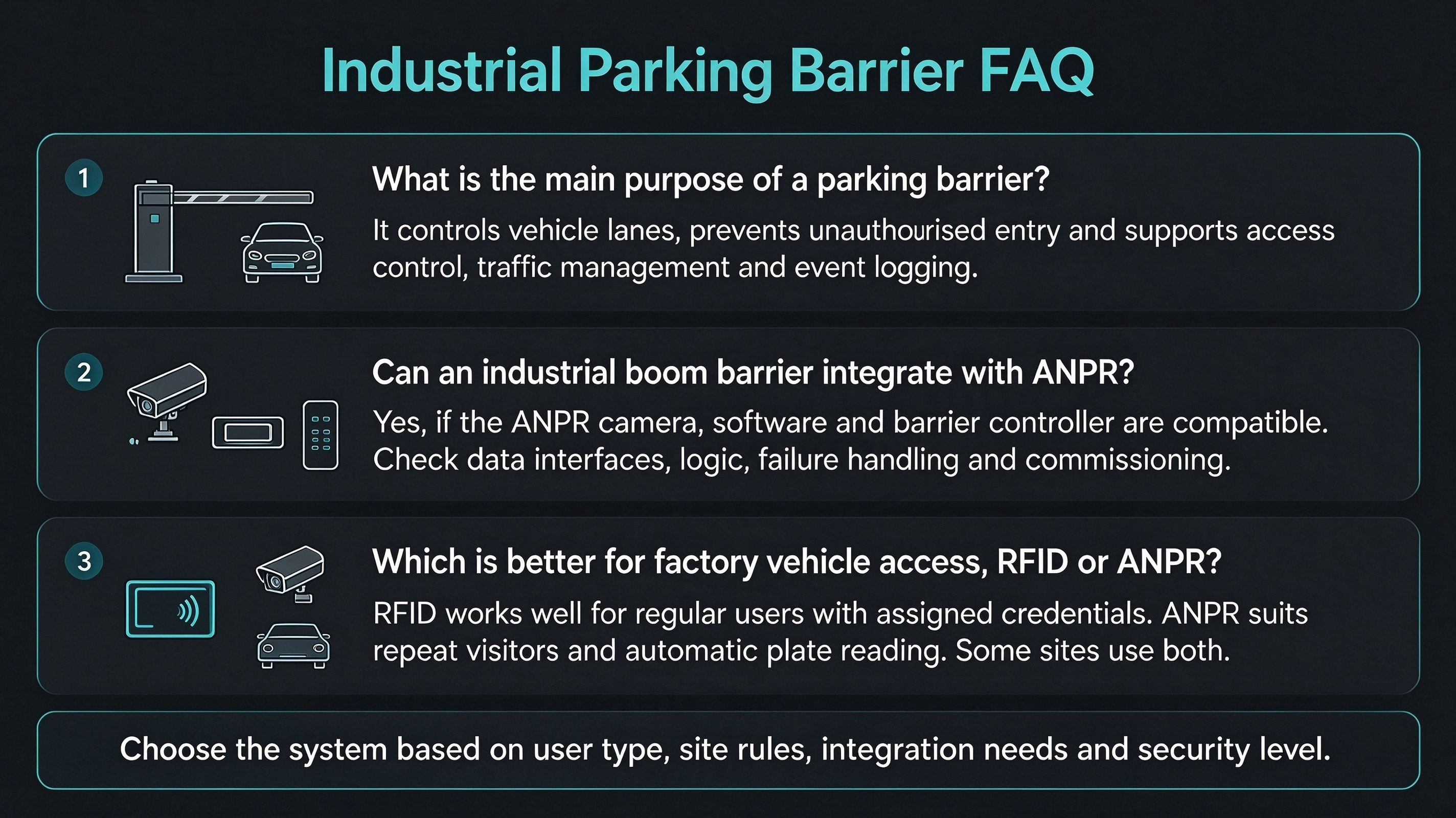
1. What is the main purpose of a parking barrier at an industrial site?
A parking barrier controls a vehicle lane and helps prevent unauthorised entry when connected to an appropriate access-control process. It can also support traffic management and event logging, depending on the wider system.
2. Can an industrial boom barrier integrate with ANPR?
Yes, if the ANPR camera or software and barrier controller are compatible. Confirm the required relay or data interface, access logic, failure handling and commissioning tests for the exact models.
3. Is RFID or ANPR better for factory vehicle access?
RFID can be convenient for repeat users with assigned credentials. ANPR can identify registered vehicles without requiring a driver to present a tag, but recognition depends on camera placement, lighting and plate condition. Some sites benefit from using both methods.
4. What should be considered for HGV entrances?
Check lane width, turning geometry, stopping distance, queue capacity, boom length, operating frequency, weather exposure and vehicle-detection safety. Make sure the layout does not obstruct public roads, pedestrian routes or emergency access.
5. Does a standard parking barrier provide high-security vehicle protection?
Not necessarily. A standard boom barrier is mainly designed to control traffic. If the site requires resistance to deliberate vehicle impact, specify a suitably tested and rated vehicle-security barrier rather than assuming a parking boom gate provides that protection.
6. What happens if the power or network fails?
The answer depends on the controller, barrier model and site procedure. Agree whether the lane should remain secured, be manually released or use a controlled fallback process, and test the procedure during commissioning. Emergency access must be considered in the site design.
7. Do industrial access-control systems need ongoing maintenance?
Yes. Inspection frequency should reflect the manufacturer's guidance, traffic volume and environmental conditions. Check the mechanism, fixings, detection equipment, credentials, logs and emergency-release procedure, and record repairs or configuration changes.
Conclusion
Parking barriers support industrial access control by providing a physical checkpoint that can work with vehicle credentials, ANPR, RFID, access software and safety-detection equipment. For factories, warehouses and logistics sites, the best solution is not simply the fastest barrier; it is a properly specified and integrated system that matches traffic demand, site risks and operating procedures.
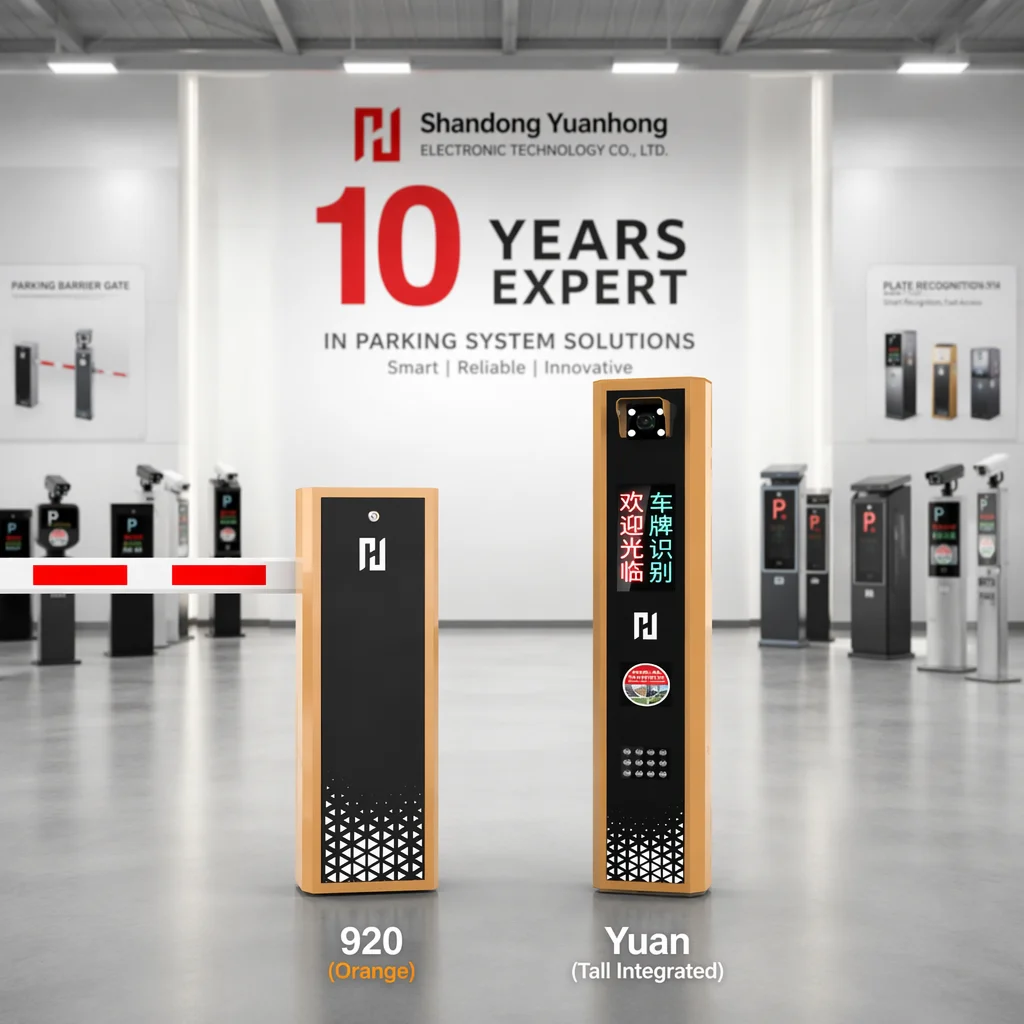
Before ordering, confirm the model-specific specifications, interface compatibility, safety devices, environmental rating, documentation, warranty and commissioning plan in writing. A site survey and a documented acceptance test can help ensure that the barrier performs as intended from the first day of operation. You can compare the hardware in our range of barriers and access control equipment before finalising the specification.