
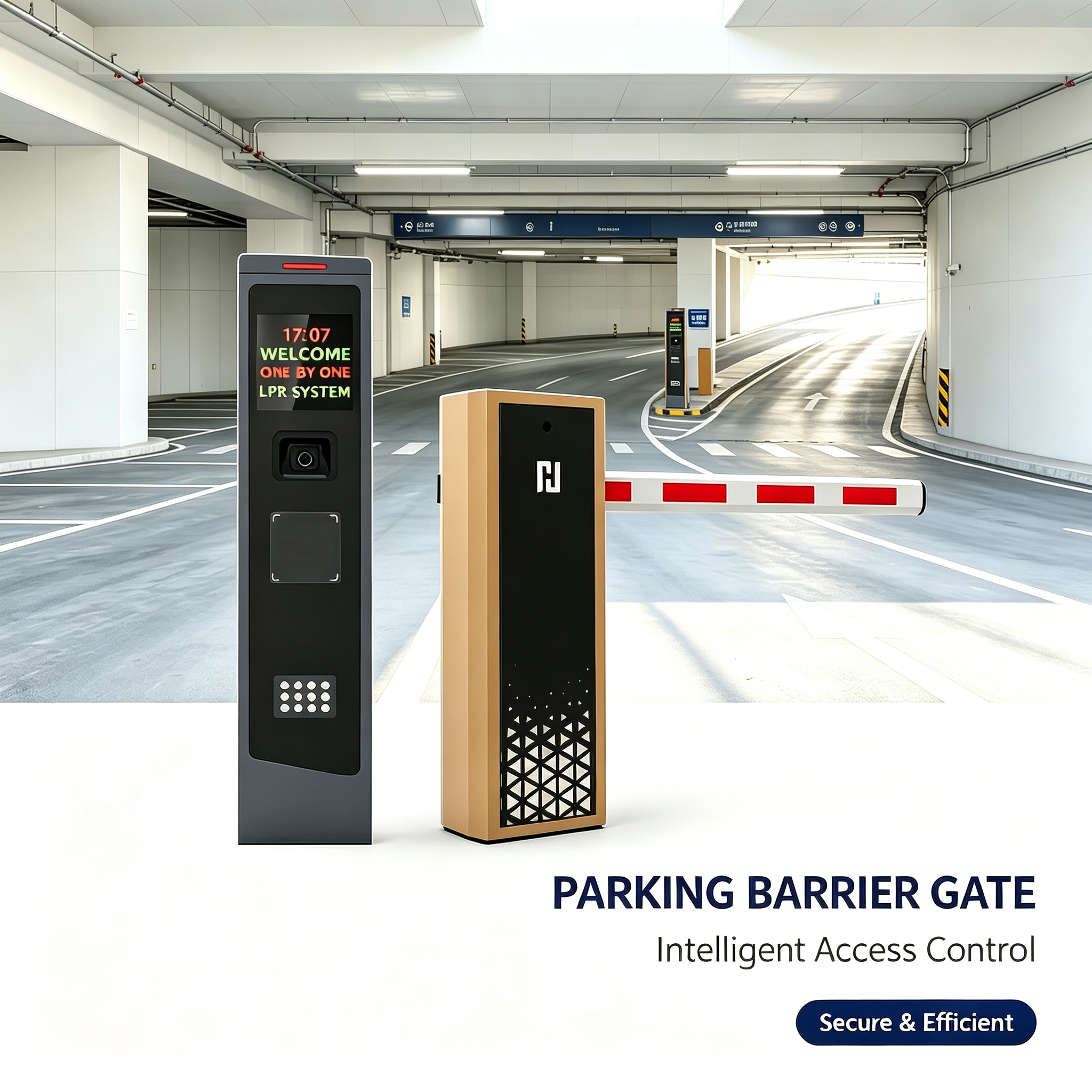
Quick answer: A parking barrier is a physical access-control device that manages vehicle entry and exit at a car park, private driveway, residential development, commercial site or other controlled entrance. The term covers automatic boom barriers that control a whole lane, compact parking-space locks that protect an individual bay, and the readers, cameras, detectors and software connected to them. A barrier helps prevent unauthorised vehicles from entering, supports parking-management procedures and can be integrated with RFID access control, intercoms, ticketing equipment and Automatic Number Plate Recognition (ANPR).
Because the term is broad, the first question is not which model to buy but what the site actually needs to control. A busy car park entrance needs a lane barrier with a defined traffic capacity; a residential bay needs a space lock; a mixed site may need both plus a management platform. Getting this decision right matters more than the choice between two similar-looking cabinets.
The term "parking barrier" can describe several different products. In vehicle entrances, it often means an automatic boom barrier with a long arm that rises to let a vehicle pass. In a reserved parking bay, it may mean a compact parking-space lock that rises to prevent another vehicle from occupying the space. The right solution depends on whether the site needs to control a lane, protect an individual bay or manage a wider access-control process.
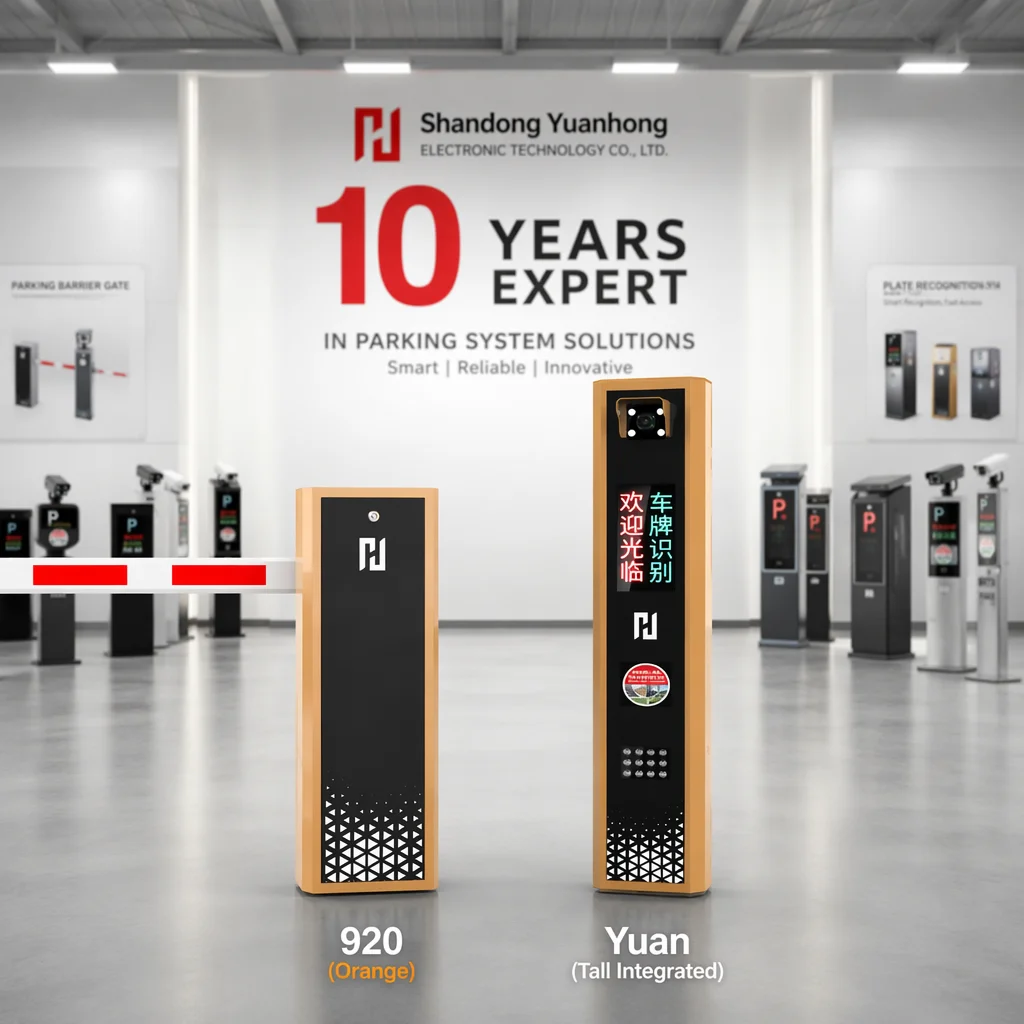
What are the main types of parking barriers?
The most suitable type depends on the entrance layout, traffic volume, level of access control, available space and operating environment. The Baroxon range includes boom barriers, high-speed barrier gates, ANPR/LPR systems, RFID barrier options, radar sensors, parking locks and related access-control equipment. These products can be considered individually or as components of a wider parking-management system.
1. Automatic boom barriers
An automatic boom barrier uses a motor-driven arm to block or release a vehicle lane. When access is authorised, the arm rises; after the vehicle has passed and the configured safety conditions are met, the arm returns to its closed position. Boom barriers are common at car parks, gated residential developments, office campuses, business parks, industrial entrances and other vehicle checkpoints.
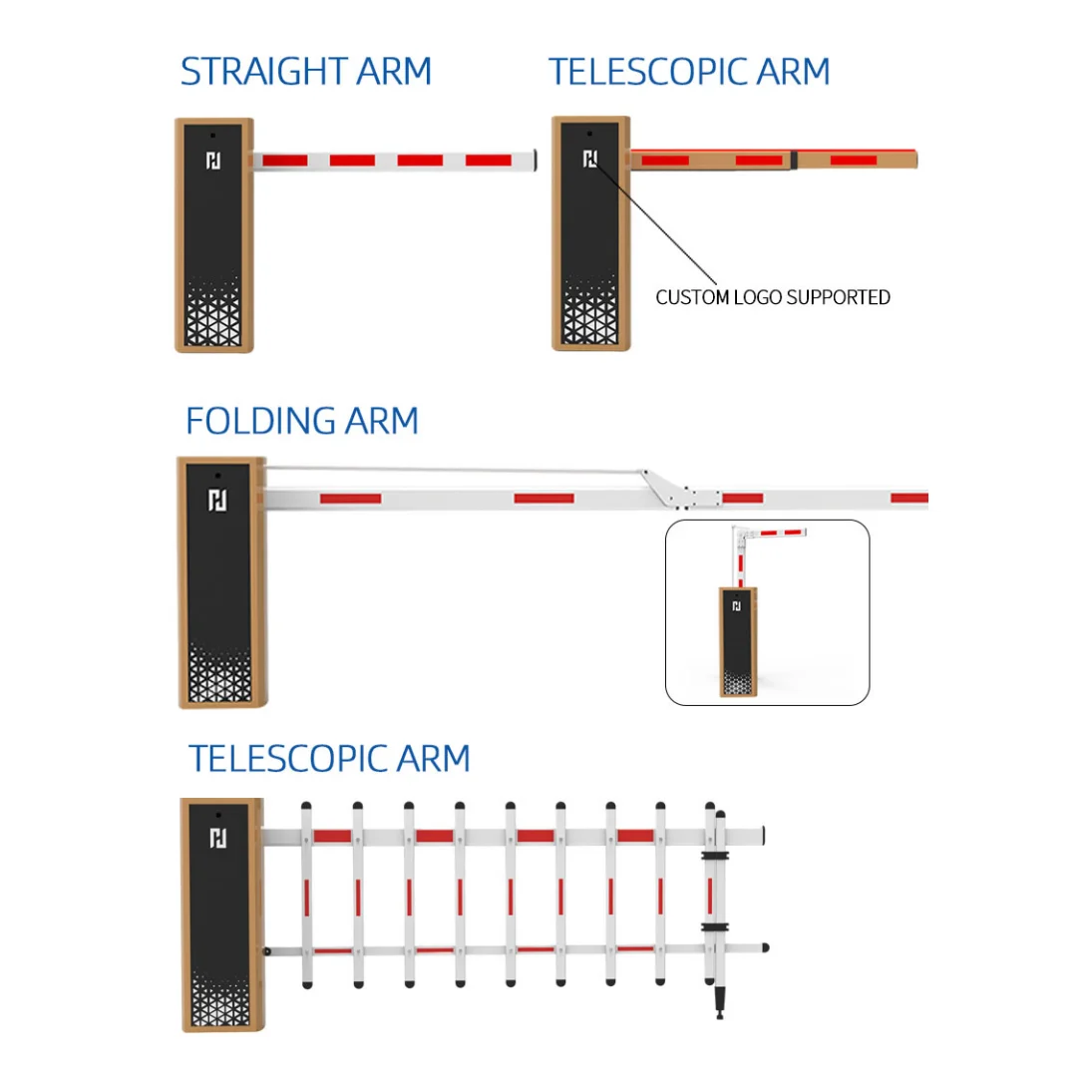
The arm length and configuration must suit the clear lane width and the selected barrier model. Straight arms are common for standard vehicle lanes, while folding, telescopic or fence-style configurations may be considered where overhead clearance or the site layout creates constraints. Always confirm supported arm types and lengths against the product specification.
2. High-speed barrier gates
High-speed barrier gates are designed for sites where vehicle throughput and short waiting times are important. They may be considered for busy commercial car parks, logistics entrances or other high-traffic lanes, provided that the selected model is rated for the expected operating frequency and the site's safety requirements.
A fast arm movement does not automatically guarantee a fast entrance process. The access reader, ANPR camera, network, payment system, vehicle queue and lane geometry can all affect throughput. Specify the complete system rather than choosing a barrier on opening speed alone.
3. RFID-enabled parking barriers
An RFID-enabled barrier uses a reader to identify a compatible tag or card. When the credential is recognised and authorised, the access-control system sends a release command to the barrier. RFID can be useful for residents, employees, subscribers and other regular users who need repeat access without requesting manual approval every time.
Before specifying RFID, confirm the credential type, reader range, installation position, communication interface and compatibility with the barrier controller. Actual reading distance can vary with the equipment, mounting arrangement and site conditions.
4. ANPR/LPR-integrated parking barriers
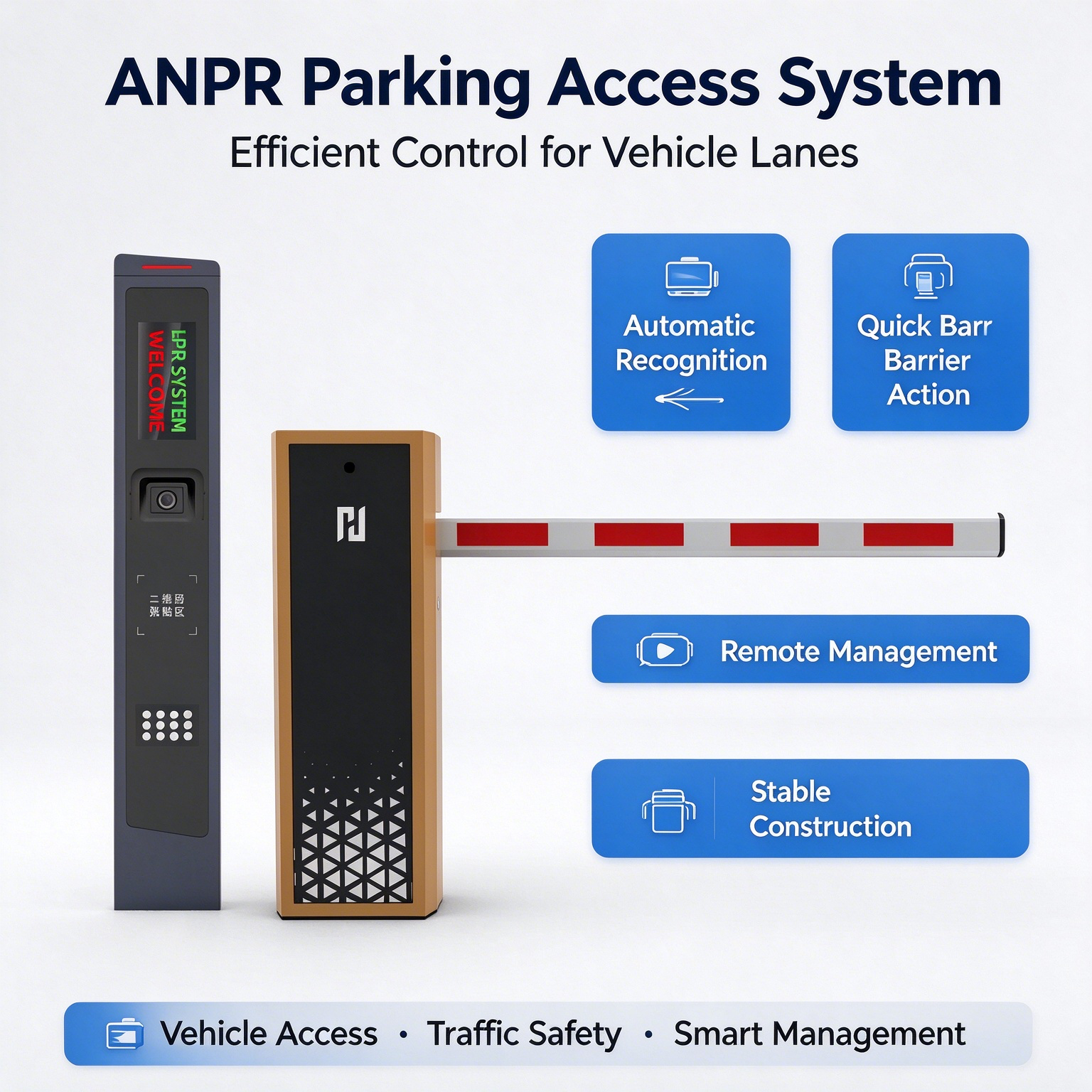
ANPR (Automatic Number Plate Recognition), also known as LPR (Licence Plate Recognition), uses a camera and software to read a vehicle registration mark. The system checks the number plate against the configured access rules and sends a release command when the vehicle is authorised. This can support ticketless or permit-based access, depending on the wider parking-management setup.
ANPR performance depends on camera position, lighting, plate visibility, vehicle approach angle, software configuration and network reliability. Ask the supplier to confirm suitability for the site's vehicle movements and number-plate requirements, and agree a fallback process for failed reads or system outages.
5. Automatic parking-space locks
A parking-space lock is a compact barrier fitted to an individual bay rather than across a full vehicle lane. Depending on the product, it may be operated by remote control, an app or another supported method. It is used to help reserve a space and deter unauthorised parking in residential developments, private driveways or allocated bays.
A parking-space lock is not a substitute for a lane barrier where the site needs to control all vehicles entering or leaving. Choose the device according to the specific problem: lane access control, individual-space protection or a combination of both.
6. Barriers supported by radar and other safety devices
Vehicle-detection radar, inductive loops, photocells and other compatible protective devices may be used to detect a vehicle or obstruction and influence the barrier's operating sequence. The appropriate arrangement depends on the model, the risk assessment, lane layout and the way the controller is configured.
Do not assume that a single sensor protects every part of a lane or that all barriers respond identically. The installer should position and configure the devices correctly, test the complete system during commissioning and explain the limits of the protection to the site operator.
| Type | What it controls | Typical use | Main selection point |
|---|---|---|---|
| Automatic boom barrier | A full vehicle lane | Car parks, residential and office entrances | Clear lane width, arm configuration and duty cycle |
| High-speed barrier gate | A high-traffic lane | Commercial car parks, logistics sites | Rated operating frequency and complete access process |
| RFID-enabled barrier | A lane, for known users | Residents, staff, permit holders | Credential type, reading distance and controller compatibility |
| ANPR/LPR-integrated barrier | A lane, by vehicle identity | Ticketless and permit-based parking | Camera position, lighting, plate visibility and fallback process |
| Parking-space lock | One allocated bay | Private bays and driveways | Operating method and protection of a single space |
How does a parking barrier work?
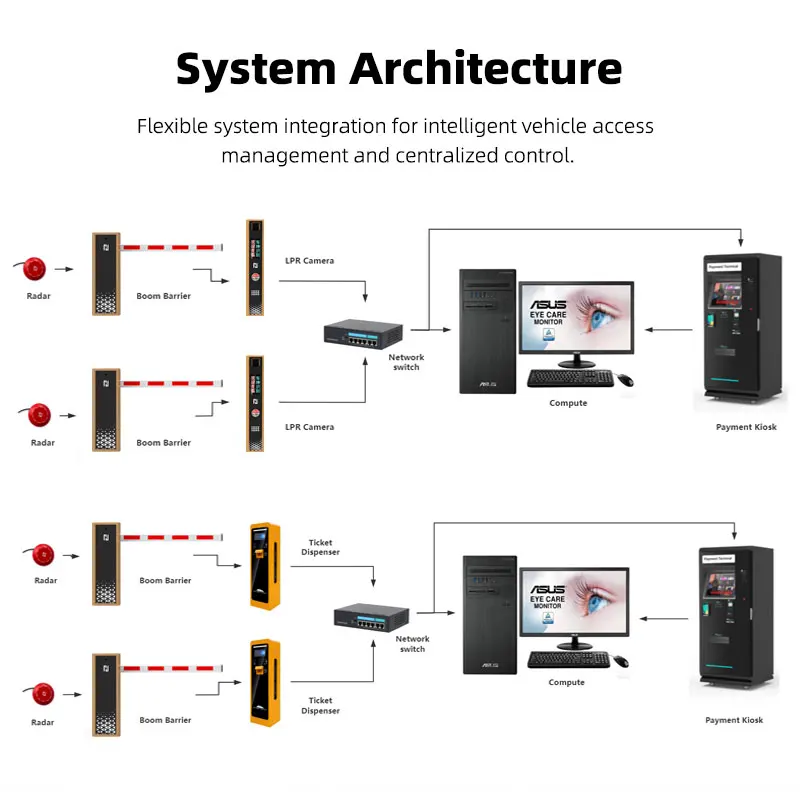
A typical automatic boom barrier works through a sequence of access authorisation, controller logic, motor-driven movement, vehicle detection and controlled closing. The exact sequence varies with the access-control equipment and the configuration installed at the site.
Step 1: A vehicle approaches the entrance
The driver approaches the marked vehicle lane and stops where indicated by signs, road markings or the site layout. The barrier arm is normally down while the system waits for an authorised request, unless a different operating mode has been configured.
Step 2: The driver requests access
The driver uses the access method provided by the site, such as a remote control, RFID card or tag, intercom release, ticketing terminal or ANPR/LPR camera. The device sends an access request or recognition result to the control system.
Step 3: The controller checks the request
The controller processes the command and checks the relevant configured inputs. If the request is valid and the operating conditions permit movement, it initiates the opening sequence. If access is not authorised, the barrier should remain closed.
Step 4: The drive raises the arm
The motor and drive mechanism move the arm from its closed position towards the open position. The actual opening time depends on the barrier model, arm length, drive type and controller settings, so the supplier should confirm performance for the exact configuration being quoted.
Step 5: The vehicle passes through
When the arm is open and the route is clear, the vehicle proceeds through the lane. Detection equipment may monitor vehicle presence or help the controller determine whether the closing sequence should be delayed.
Step 6: Safety inputs influence closing
The configured safety system checks the relevant detector signals. Depending on the installation, the controller may hold the arm open, stop movement or reverse it when a vehicle or obstruction is detected. The response must be verified against the manufacturer's instructions and commissioning tests.
Step 7: The arm closes and the system resets
When the vehicle has passed and the configured conditions allow closing, the drive lowers the arm. The barrier returns to its normal standby state, ready for the next authorised request. If connected to parking-management software, the system may also record the access event.
Where are parking barriers used?
Parking barriers are used across many environments where vehicle access needs to be controlled, recorded or separated from pedestrian movement.
- Residential developments and gated communities: manage resident, visitor and contractor access, often alongside RFID or intercom systems.
- Office buildings and business parks: control staff and visitor vehicle entry and support permit-based parking.
- Retail and public car parks: coordinate entry and exit with ticketing, payment or ANPR/LPR systems where specified.
- Industrial sites and logistics yards: manage vehicle checkpoints and help separate public access from operational areas.
- Hospitals, schools and campuses: manage designated entrances while considering emergency access, pedestrian safety and peak-time queues.
- Private driveways and allocated bays: use a suitable parking lock where the priority is to reserve one individual space rather than control a whole lane.
What should you consider when choosing a parking barrier?
The correct specification should reflect the site's physical layout, traffic demand, access policy, safety requirements and maintenance arrangements. Consider the following points before requesting a quotation.
- Lane width and arm configuration: measure the clear opening and confirm the permitted arm length and type for the selected model.
- Traffic volume and duty cycle: estimate normal and peak-hour vehicle movements, and ask the supplier to confirm whether the model is rated for the expected frequency of operation.
- Access-control method: decide whether drivers will use RFID, remote controls, an intercom, tickets, ANPR/LPR or a combination of methods.
- Safety devices: confirm the required vehicle detection and protective devices, their coverage and how they interact with the controller.
- Environment and power: check the power supply, outdoor exposure, mounting surface, drainage, wind conditions and available installation space.
- Integration and communications: confirm compatibility with existing access-control panels, ANPR cameras, RFID readers, payment systems and management software.
- Documentation and support: request the relevant installation drawings, wiring diagrams, operating instructions, conformity documentation, warranty terms and maintenance guidance.
Safety and maintenance considerations
A parking barrier is powered moving equipment. Safe operation depends on the complete installation, an appropriate risk assessment, correctly configured protective devices, clear signage and staff who understand the operating procedure. Do not assume that a barrier is safe for every site simply because it has a sensor or a conformity mark.
The installer should test the arm movement, limits, access-control inputs, vehicle detectors and protective responses during commissioning. Site operators should follow the manufacturer's maintenance instructions and arrange inspection if the arm moves irregularly, equipment is damaged or detection becomes unreliable. Any manual-release procedure should only be used as instructed and when it is safe to do so.
The client, designer, installer and supplier should clarify their responsibilities and confirm the current legal and technical requirements applicable to the specific product and installation. Where a project requires particular conformity markings or documents, confirm the exact requirement in writing for the model being supplied.
Frequently asked questions
Is a parking barrier the same as a boom barrier?
Not always. "Parking barrier" is a broad term that can refer to a boom barrier controlling a vehicle lane or a parking-space lock protecting an individual bay. A boom barrier is one common type of parking barrier.
How does an automatic parking barrier open?
A compatible access device sends a valid command or authorisation result to the controller. If the operating conditions allow movement, the motor-driven mechanism raises the arm. The barrier then follows its configured vehicle-detection and closing sequence.
Can a parking barrier work with ANPR or RFID?
Yes, if the barrier controller, camera or reader, software and communication interfaces are compatible. The complete system should be specified and tested as one installation rather than treating each component as independent.
Which parking barrier is best for a busy car park?
The best option depends on lane width, peak traffic, required duty cycle, access-control method and safety design. A high-speed model may be suitable for some busy entrances, but the complete access process — including recognition, payment and queue layout — should be assessed before selecting equipment.
Does a parking barrier need maintenance?
Yes. Maintenance requirements vary by model, operating frequency and environment. Follow the manufacturer's instructions and arrange qualified inspection when there is unusual movement, impact damage, unreliable detection or another fault.
Conclusion
A parking barrier helps control vehicle access, manage parking permissions and organise traffic at a site entrance. Automatic boom barriers are commonly used to control vehicle lanes, while parking-space locks help protect individual bays. RFID, ANPR/LPR, intercoms, vehicle detectors and parking-management software can add access-control functions when the equipment is compatible and correctly configured.
Start by defining the lane dimensions, traffic demand, access method and site risks. Then confirm the appropriate barrier type, arm configuration, safety devices, integration requirements, documentation and after-sales support with the supplier. You can review the hardware options in our boom barrier and parking system range before requesting a specification.